•  
(MASTER OF CRAFTS) CHINA-BEIJING-PALACE CARPET-INHERITOR-STUDIO (CN)

(MASTER OF CRAFTS) CHINA-BEIJING-PALACE CARPET-INHERITOR-STUDIO (CN)

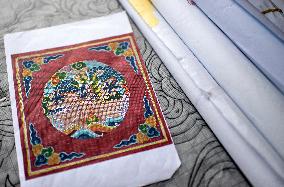
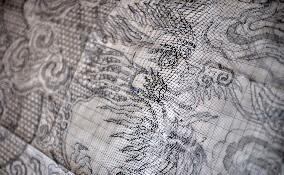
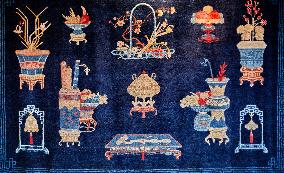
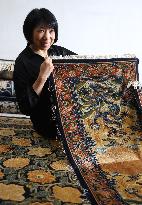
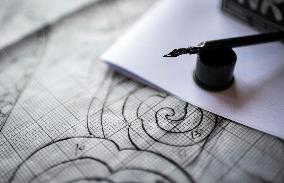
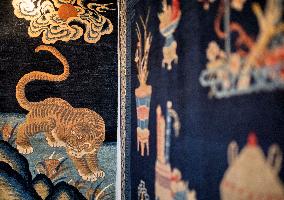
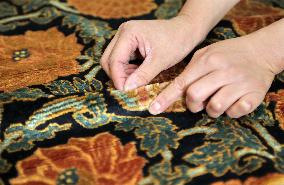
(240629) -- BEIJING, June 29, 2024 Photo by Xinhua/ABACAPRESS.COM) -- This photo taken on June 27, 2024 shows a design pattern of a palace carpet displayed at the studio of Ji Yu in Beijing, capital of China. Beijing palace carpet is a splendid example of China's traditional carpet weaving techniques. Known for its intricate production processes and beautiful patterns, the palace carpet represents the pinnacle of Chinese weaving artistry. The production involves four main steps: dyeing with traditional Chinese herbs, pattern design, weaving and shaping, and finally, finishing touches. As one of the "Beijing Eight Imperial Handicrafts," the art of palace carpet was designated a national intangible cultural heritage in 2008. Ji Yu, born in 1971 in central China's Henan Province, has dedicated over 30 years to the repair and creation of traditional palace carpets. In 1995, along with her husband Li Dongyang, she moved to Beijing to specialize in restoring ancient carpets. Over the years, the couple has insisted

  •  
(MASTER OF CRAFTS) CHINA-BEIJING-PALACE CARPET-INHERITOR-STUDIO (CN)

(MASTER OF CRAFTS) CHINA-BEIJING-PALACE CARPET-INHERITOR-STUDIO (CN)

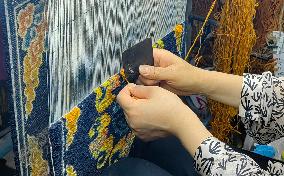
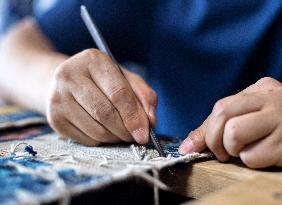
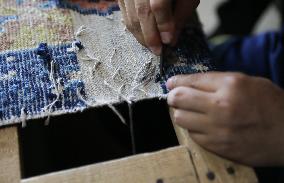
(240629) -- BEIJING, June 29, 2024 Photo by Xinhua/ABACAPRESS.COM) -- Ji Yu's husband Li Dongyang repairs a palace carpet at her studio in Beijing, capital of China, June 27, 2024. Beijing palace carpet is a splendid example of China's traditional carpet weaving techniques. Known for its intricate production processes and beautiful patterns, the palace carpet represents the pinnacle of Chinese weaving artistry. The production involves four main steps: dyeing with traditional Chinese herbs, pattern design, weaving and shaping, and finally, finishing touches. As one of the "Beijing Eight Imperial Handicrafts," the art of palace carpet was designated a national intangible cultural heritage in 2008. Ji Yu, born in 1971 in central China's Henan Province, has dedicated over 30 years to the repair and creation of traditional palace carpets. In 1995, along with her husband Li Dongyang, she moved to Beijing to specialize in restoring ancient carpets. Over the years, the couple has insisted on traditional dyeing and we

  •  
(MASTER OF CRAFTS) CHINA-BEIJING-PALACE CARPET-INHERITOR-STUDIO (CN)

(MASTER OF CRAFTS) CHINA-BEIJING-PALACE CARPET-INHERITOR-STUDIO (CN)

(240629) -- BEIJING, June 29, 2024 Photo by Xinhua/ABACAPRESS.COM) -- Wang Guoying sits on a palace carpet at the studio of Ji Yu in Beijing, capital of China, June 27, 2024. Beijing palace carpet is a splendid example of China's traditional carpet weaving techniques. Known for its intricate production processes and beautiful patterns, the palace carpet represents the pinnacle of Chinese weaving artistry. The production involves four main steps: dyeing with traditional Chinese herbs, pattern design, weaving and shaping, and finally, finishing touches. As one of the "Beijing Eight Imperial Handicrafts," the art of palace carpet was designated a national intangible cultural heritage in 2008. Ji Yu, born in 1971 in central China's Henan Province, has dedicated over 30 years to the repair and creation of traditional palace carpets. In 1995, along with her husband Li Dongyang, she moved to Beijing to specialize in restoring ancient carpets. Over the years, the couple has insisted on traditional dyeing and weaving

  •  
(MASTER OF CRAFTS) CHINA-BEIJING-PALACE CARPET-INHERITOR-STUDIO (CN)

(MASTER OF CRAFTS) CHINA-BEIJING-PALACE CARPET-INHERITOR-STUDIO (CN)

(240629) -- BEIJING, June 29, 2024 Photo by Xinhua/ABACAPRESS.COM) -- This photo taken on June 27, 2024 shows a palace carpet waiting for repair at the studio of Ji Yu in Beijing, capital of China. Beijing palace carpet is a splendid example of China's traditional carpet weaving techniques. Known for its intricate production processes and beautiful patterns, the palace carpet represents the pinnacle of Chinese weaving artistry. The production involves four main steps: dyeing with traditional Chinese herbs, pattern design, weaving and shaping, and finally, finishing touches. As one of the "Beijing Eight Imperial Handicrafts," the art of palace carpet was designated a national intangible cultural heritage in 2008. Ji Yu, born in 1971 in central China's Henan Province, has dedicated over 30 years to the repair and creation of traditional palace carpets. In 1995, along with her husband Li Dongyang, she moved to Beijing to specialize in restoring ancient carpets. Over the years, the couple has insisted on traditio

  •  
(MASTER OF CRAFTS) CHINA-BEIJING-PALACE CARPET-INHERITOR-STUDIO (CN)

(MASTER OF CRAFTS) CHINA-BEIJING-PALACE CARPET-INHERITOR-STUDIO (CN)

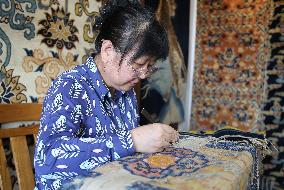
(240629) -- BEIJING, June 29, 2024 Photo by Xinhua/ABACAPRESS.COM) -- Wang Guoying repairs a palace carpet at the studio of Ji Yu in Beijing, capital of China, June 27, 2024. Beijing palace carpet is a splendid example of China's traditional carpet weaving techniques. Known for its intricate production processes and beautiful patterns, the palace carpet represents the pinnacle of Chinese weaving artistry. The production involves four main steps: dyeing with traditional Chinese herbs, pattern design, weaving and shaping, and finally, finishing touches. As one of the "Beijing Eight Imperial Handicrafts," the art of palace carpet was designated a national intangible cultural heritage in 2008. Ji Yu, born in 1971 in central China's Henan Province, has dedicated over 30 years to the repair and creation of traditional palace carpets. In 1995, along with her husband Li Dongyang, she moved to Beijing to specialize in restoring ancient carpets. Over the years, the couple has insisted on traditional dyeing and weaving

  •  
(MASTER OF CRAFTS) CHINA-BEIJING-PALACE CARPET-INHERITOR-STUDIO (CN)

(MASTER OF CRAFTS) CHINA-BEIJING-PALACE CARPET-INHERITOR-STUDIO (CN)

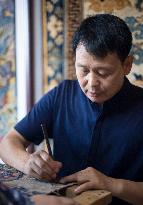
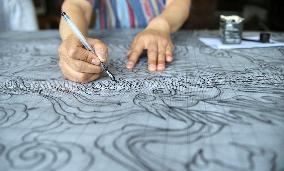
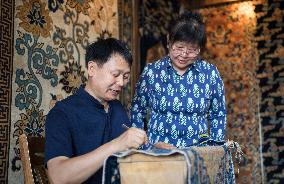
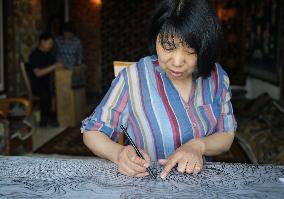
(240629) -- BEIJING, June 29, 2024 Photo by Xinhua/ABACAPRESS.COM) -- Ji Yu draws a design pattern for a palace carpet at her studio in Beijing, capital of China, June 27, 2024. Beijing palace carpet is a splendid example of China's traditional carpet weaving techniques. Known for its intricate production processes and beautiful patterns, the palace carpet represents the pinnacle of Chinese weaving artistry. The production involves four main steps: dyeing with traditional Chinese herbs, pattern design, weaving and shaping, and finally, finishing touches. As one of the "Beijing Eight Imperial Handicrafts," the art of palace carpet was designated a national intangible cultural heritage in 2008. Ji Yu, born in 1971 in central China's Henan Province, has dedicated over 30 years to the repair and creation of traditional palace carpets. In 1995, along with her husband Li Dongyang, she moved to Beijing to specialize in restoring ancient carpets. Over the years, the couple has insisted on traditional dyeing and weavi

  •  
(MASTER OF CRAFTS) CHINA-BEIJING-PALACE CARPET-INHERITOR-STUDIO (CN)

(MASTER OF CRAFTS) CHINA-BEIJING-PALACE CARPET-INHERITOR-STUDIO (CN)

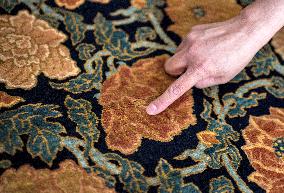
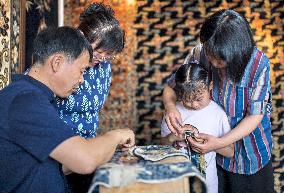
(240629) -- BEIJING, June 29, 2024 Photo by Xinhua/ABACAPRESS.COM) -- Ji Yu's husband Li Dongyang shows a palace carpet at her studio in Beijing, capital of China, June 27, 2024. Beijing palace carpet is a splendid example of China's traditional carpet weaving techniques. Known for its intricate production processes and beautiful patterns, the palace carpet represents the pinnacle of Chinese weaving artistry. The production involves four main steps: dyeing with traditional Chinese herbs, pattern design, weaving and shaping, and finally, finishing touches. As one of the "Beijing Eight Imperial Handicrafts," the art of palace carpet was designated a national intangible cultural heritage in 2008. Ji Yu, born in 1971 in central China's Henan Province, has dedicated over 30 years to the repair and creation of traditional palace carpets. In 1995, along with her husband Li Dongyang, she moved to Beijing to specialize in restoring ancient carpets. Over the years, the couple has insisted on traditional dyeing and weav

  •  
(MASTER OF CRAFTS) CHINA-BEIJING-PALACE CARPET-INHERITOR-STUDIO (CN)

(MASTER OF CRAFTS) CHINA-BEIJING-PALACE CARPET-INHERITOR-STUDIO (CN)

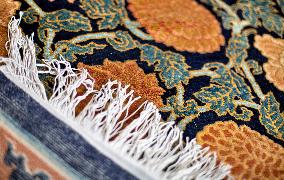
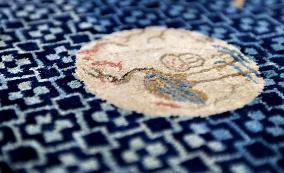
(240629) -- BEIJING, June 29, 2024 Photo by Xinhua/ABACAPRESS.COM) -- This photo taken on June 27, 2024 shows a detail of a palace carpet displayed at the studio of Ji Yu in Beijing, capital of China. Beijing palace carpet is a splendid example of China's traditional carpet weaving techniques. Known for its intricate production processes and beautiful patterns, the palace carpet represents the pinnacle of Chinese weaving artistry. The production involves four main steps: dyeing with traditional Chinese herbs, pattern design, weaving and shaping, and finally, finishing touches. As one of the "Beijing Eight Imperial Handicrafts," the art of palace carpet was designated a national intangible cultural heritage in 2008. Ji Yu, born in 1971 in central China's Henan Province, has dedicated over 30 years to the repair and creation of traditional palace carpets. In 1995, along with her husband Li Dongyang, she moved to Beijing to specialize in restoring ancient carpets. Over the years, the couple has insisted on tradi

  •  
(MASTER OF CRAFTS) CHINA-BEIJING-PALACE CARPET-INHERITOR-STUDIO (CN)

(MASTER OF CRAFTS) CHINA-BEIJING-PALACE CARPET-INHERITOR-STUDIO (CN)

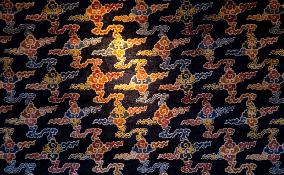
(240629) -- BEIJING, June 29, 2024 Photo by Xinhua/ABACAPRESS.COM) -- This photo taken on June 27, 2024 shows the design pattern for a palace carpet displayed at the studio of Ji Yu in Beijing, capital of China. Beijing palace carpet is a splendid example of China's traditional carpet weaving techniques. Known for its intricate production processes and beautiful patterns, the palace carpet represents the pinnacle of Chinese weaving artistry. The production involves four main steps: dyeing with traditional Chinese herbs, pattern design, weaving and shaping, and finally, finishing touches. As one of the "Beijing Eight Imperial Handicrafts," the art of palace carpet was designated a national intangible cultural heritage in 2008. Ji Yu, born in 1971 in central China's Henan Province, has dedicated over 30 years to the repair and creation of traditional palace carpets. In 1995, along with her husband Li Dongyang, she moved to Beijing to specialize in restoring ancient carpets. Over the years, the couple has insist

  •  
(MASTER OF CRAFTS) CHINA-BEIJING-PALACE CARPET-INHERITOR-STUDIO (CN)

(MASTER OF CRAFTS) CHINA-BEIJING-PALACE CARPET-INHERITOR-STUDIO (CN)

(240629) -- BEIJING, June 29, 2024 Photo by Xinhua/ABACAPRESS.COM) -- This photo taken on June 27, 2024 shows a palace carpet displayed at the studio of Ji Yu in Beijing, capital of China. Beijing palace carpet is a splendid example of China's traditional carpet weaving techniques. Known for its intricate production processes and beautiful patterns, the palace carpet represents the pinnacle of Chinese weaving artistry. The production involves four main steps: dyeing with traditional Chinese herbs, pattern design, weaving and shaping, and finally, finishing touches. As one of the "Beijing Eight Imperial Handicrafts," the art of palace carpet was designated a national intangible cultural heritage in 2008. Ji Yu, born in 1971 in central China's Henan Province, has dedicated over 30 years to the repair and creation of traditional palace carpets. In 1995, along with her husband Li Dongyang, she moved to Beijing to specialize in restoring ancient carpets. Over the years, the couple has insisted on traditional dyein

  •  
(MASTER OF CRAFTS) CHINA-BEIJING-PALACE CARPET-INHERITOR-STUDIO (CN)

(MASTER OF CRAFTS) CHINA-BEIJING-PALACE CARPET-INHERITOR-STUDIO (CN)

(240629) -- BEIJING, June 29, 2024 Photo by Xinhua/ABACAPRESS.COM) -- Ji Yu's husband Li Dongyang (L) repairs a palace carpet with Wang Guoying standing by at Ji Yu's studio in Beijing, capital of China, June 27, 2024. Beijing palace carpet is a splendid example of China's traditional carpet weaving techniques. Known for its intricate production processes and beautiful patterns, the palace carpet represents the pinnacle of Chinese weaving artistry. The production involves four main steps: dyeing with traditional Chinese herbs, pattern design, weaving and shaping, and finally, finishing touches. As one of the "Beijing Eight Imperial Handicrafts," the art of palace carpet was designated a national intangible cultural heritage in 2008. Ji Yu, born in 1971 in central China's Henan Province, has dedicated over 30 years to the repair and creation of traditional palace carpets. In 1995, along with her husband Li Dongyang, she moved to Beijing to specialize in restoring ancient carpets. Over the years, the couple has

  •  
(MASTER OF CRAFTS) CHINA-BEIJING-PALACE CARPET-INHERITOR-STUDIO (CN)

(MASTER OF CRAFTS) CHINA-BEIJING-PALACE CARPET-INHERITOR-STUDIO (CN)

(240629) -- BEIJING, June 29, 2024 Photo by Xinhua/ABACAPRESS.COM) -- This undated photo shows Ji Yu weaving a palace carpet at her factory in central China's Henan Province. Beijing palace carpet is a splendid example of China's traditional carpet weaving techniques. Known for its intricate production processes and beautiful patterns, the palace carpet represents the pinnacle of Chinese weaving artistry. The production involves four main steps: dyeing with traditional Chinese herbs, pattern design, weaving and shaping, and finally, finishing touches. As one of the "Beijing Eight Imperial Handicrafts," the art of palace carpet was designated a national intangible cultural heritage in 2008. Ji Yu, born in 1971 in central China's Henan Province, has dedicated over 30 years to the repair and creation of traditional palace carpets. In 1995, along with her husband Li Dongyang, she moved to Beijing to specialize in restoring ancient carpets. Over the years, the couple has insisted on traditional dyeing and weaving

  •  
(MASTER OF CRAFTS) CHINA-BEIJING-PALACE CARPET-INHERITOR-STUDIO (CN)

(MASTER OF CRAFTS) CHINA-BEIJING-PALACE CARPET-INHERITOR-STUDIO (CN)

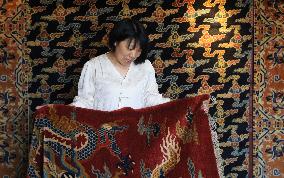
(240629) -- BEIJING, June 29, 2024 Photo by Xinhua/ABACAPRESS.COM) -- Ji Yu shows a palace carpet at her studio in Beijing, capital of China, June 27, 2024. Beijing palace carpet is a splendid example of China's traditional carpet weaving techniques. Known for its intricate production processes and beautiful patterns, the palace carpet represents the pinnacle of Chinese weaving artistry. The production involves four main steps: dyeing with traditional Chinese herbs, pattern design, weaving and shaping, and finally, finishing touches. As one of the "Beijing Eight Imperial Handicrafts," the art of palace carpet was designated a national intangible cultural heritage in 2008. Ji Yu, born in 1971 in central China's Henan Province, has dedicated over 30 years to the repair and creation of traditional palace carpets. In 1995, along with her husband Li Dongyang, she moved to Beijing to specialize in restoring ancient carpets. Over the years, the couple has insisted on traditional dyeing and weaving techniques. During

  •  
(MASTER OF CRAFTS) CHINA-BEIJING-PALACE CARPET-INHERITOR-STUDIO (CN)

(MASTER OF CRAFTS) CHINA-BEIJING-PALACE CARPET-INHERITOR-STUDIO (CN)

(240629) -- BEIJING, June 29, 2024 Photo by Xinhua/ABACAPRESS.COM) -- Ji Yu draws a pattern for a palace carpet at her studio in Beijing, capital of China, June 27, 2024. Beijing palace carpet is a splendid example of China's traditional carpet weaving techniques. Known for its intricate production processes and beautiful patterns, the palace carpet represents the pinnacle of Chinese weaving artistry. The production involves four main steps: dyeing with traditional Chinese herbs, pattern design, weaving and shaping, and finally, finishing touches. As one of the "Beijing Eight Imperial Handicrafts," the art of palace carpet was designated a national intangible cultural heritage in 2008. Ji Yu, born in 1971 in central China's Henan Province, has dedicated over 30 years to the repair and creation of traditional palace carpets. In 1995, along with her husband Li Dongyang, she moved to Beijing to specialize in restoring ancient carpets. Over the years, the couple has insisted on traditional dyeing and weaving tech

  •  
(MASTER OF CRAFTS) CHINA-BEIJING-PALACE CARPET-INHERITOR-STUDIO (CN)

(MASTER OF CRAFTS) CHINA-BEIJING-PALACE CARPET-INHERITOR-STUDIO (CN)

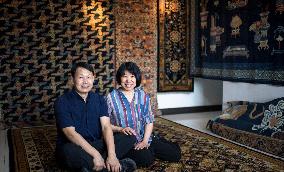
(240629) -- BEIJING, June 29, 2024 Photo by Xinhua/ABACAPRESS.COM) -- Ji Yu poses for a photo with her husband Li Dongyang at her studio in Beijing, capital of China, June 27, 2024. Beijing palace carpet is a splendid example of China's traditional carpet weaving techniques. Known for its intricate production processes and beautiful patterns, the palace carpet represents the pinnacle of Chinese weaving artistry. The production involves four main steps: dyeing with traditional Chinese herbs, pattern design, weaving and shaping, and finally, finishing touches. As one of the "Beijing Eight Imperial Handicrafts," the art of palace carpet was designated a national intangible cultural heritage in 2008. Ji Yu, born in 1971 in central China's Henan Province, has dedicated over 30 years to the repair and creation of traditional palace carpets. In 1995, along with her husband Li Dongyang, she moved to Beijing to specialize in restoring ancient carpets. Over the years, the couple has insisted on traditional dyeing and w

  •  
(MASTER OF CRAFTS) CHINA-BEIJING-PALACE CARPET-INHERITOR-STUDIO (CN)

(MASTER OF CRAFTS) CHINA-BEIJING-PALACE CARPET-INHERITOR-STUDIO (CN)

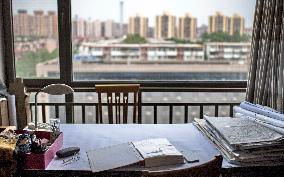
(240629) -- BEIJING, June 29, 2024 Photo by Xinhua/ABACAPRESS.COM) -- This photo taken on June 27, 2024 shows a scene at the studio of Ji Yu in Beijing, capital of China. Beijing palace carpet is a splendid example of China's traditional carpet weaving techniques. Known for its intricate production processes and beautiful patterns, the palace carpet represents the pinnacle of Chinese weaving artistry. The production involves four main steps: dyeing with traditional Chinese herbs, pattern design, weaving and shaping, and finally, finishing touches. As one of the "Beijing Eight Imperial Handicrafts," the art of palace carpet was designated a national intangible cultural heritage in 2008. Ji Yu, born in 1971 in central China's Henan Province, has dedicated over 30 years to the repair and creation of traditional palace carpets. In 1995, along with her husband Li Dongyang, she moved to Beijing to specialize in restoring ancient carpets. Over the years, the couple has insisted on traditional dyeing and weaving tech

  •  
(MASTER OF CRAFTS) CHINA-BEIJING-PALACE CARPET-INHERITOR-STUDIO (CN)

(MASTER OF CRAFTS) CHINA-BEIJING-PALACE CARPET-INHERITOR-STUDIO (CN)

(240629) -- BEIJING, June 29, 2024 Photo by Xinhua/ABACAPRESS.COM) -- A design pattern of palace carpet is seen at the studio of Ji Yu in Beijing, capital of China, June 27, 2024. Beijing palace carpet is a splendid example of China's traditional carpet weaving techniques. Known for its intricate production processes and beautiful patterns, the palace carpet represents the pinnacle of Chinese weaving artistry. The production involves four main steps: dyeing with traditional Chinese herbs, pattern design, weaving and shaping, and finally, finishing touches. As one of the "Beijing Eight Imperial Handicrafts," the art of palace carpet was designated a national intangible cultural heritage in 2008. Ji Yu, born in 1971 in central China's Henan Province, has dedicated over 30 years to the repair and creation of traditional palace carpets. In 1995, along with her husband Li Dongyang, she moved to Beijing to specialize in restoring ancient carpets. Over the years, the couple has insisted on traditional dyeing and wea

  •  
(MASTER OF CRAFTS) CHINA-BEIJING-PALACE CARPET-INHERITOR-STUDIO (CN)

(MASTER OF CRAFTS) CHINA-BEIJING-PALACE CARPET-INHERITOR-STUDIO (CN)

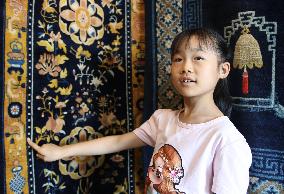
(240629) -- BEIJING, June 29, 2024 Photo by Xinhua/ABACAPRESS.COM) -- Ji Yu's daughter shows a palace carpet at Ji Yu's studio in Beijing, capital of China, June 27, 2024. Beijing palace carpet is a splendid example of China's traditional carpet weaving techniques. Known for its intricate production processes and beautiful patterns, the palace carpet represents the pinnacle of Chinese weaving artistry. The production involves four main steps: dyeing with traditional Chinese herbs, pattern design, weaving and shaping, and finally, finishing touches. As one of the "Beijing Eight Imperial Handicrafts," the art of palace carpet was designated a national intangible cultural heritage in 2008. Ji Yu, born in 1971 in central China's Henan Province, has dedicated over 30 years to the repair and creation of traditional palace carpets. In 1995, along with her husband Li Dongyang, she moved to Beijing to specialize in restoring ancient carpets. Over the years, the couple has insisted on traditional dyeing and weaving tec

  •  
(MASTER OF CRAFTS) CHINA-BEIJING-PALACE CARPET-INHERITOR-STUDIO (CN)

(MASTER OF CRAFTS) CHINA-BEIJING-PALACE CARPET-INHERITOR-STUDIO (CN)

(240629) -- BEIJING, June 29, 2024 Photo by Xinhua/ABACAPRESS.COM) -- This photo taken on June 27, 2024 shows a detail of a palace carpet displayed at the studio of Ji Yu in Beijing, capital of China. Beijing palace carpet is a splendid example of China's traditional carpet weaving techniques. Known for its intricate production processes and beautiful patterns, the palace carpet represents the pinnacle of Chinese weaving artistry. The production involves four main steps: dyeing with traditional Chinese herbs, pattern design, weaving and shaping, and finally, finishing touches. As one of the "Beijing Eight Imperial Handicrafts," the art of palace carpet was designated a national intangible cultural heritage in 2008. Ji Yu, born in 1971 in central China's Henan Province, has dedicated over 30 years to the repair and creation of traditional palace carpets. In 1995, along with her husband Li Dongyang, she moved to Beijing to specialize in restoring ancient carpets. Over the years, the couple has insisted on tradi

  •  
(MASTER OF CRAFTS) CHINA-BEIJING-PALACE CARPET-INHERITOR-STUDIO (CN)

(MASTER OF CRAFTS) CHINA-BEIJING-PALACE CARPET-INHERITOR-STUDIO (CN)

(240629) -- BEIJING, June 29, 2024 Photo by Xinhua/ABACAPRESS.COM) -- Ji Yu's husband Li Dongyang repairs a palace carpet at her studio in Beijing, capital of China, June 27, 2024. Beijing palace carpet is a splendid example of China's traditional carpet weaving techniques. Known for its intricate production processes and beautiful patterns, the palace carpet represents the pinnacle of Chinese weaving artistry. The production involves four main steps: dyeing with traditional Chinese herbs, pattern design, weaving and shaping, and finally, finishing touches. As one of the "Beijing Eight Imperial Handicrafts," the art of palace carpet was designated a national intangible cultural heritage in 2008. Ji Yu, born in 1971 in central China's Henan Province, has dedicated over 30 years to the repair and creation of traditional palace carpets. In 1995, along with her husband Li Dongyang, she moved to Beijing to specialize in restoring ancient carpets. Over the years, the couple has insisted on traditional dyeing and we

  •  
(MASTER OF CRAFTS) CHINA-BEIJING-PALACE CARPET-INHERITOR-STUDIO (CN)

(MASTER OF CRAFTS) CHINA-BEIJING-PALACE CARPET-INHERITOR-STUDIO (CN)

(240629) -- BEIJING, June 29, 2024 Photo by Xinhua/ABACAPRESS.COM) -- This photo taken on June 27, 2024 shows the details of a palace carpet displayed at the studio of Ji Yu in Beijing, capital of China. Beijing palace carpet is a splendid example of China's traditional carpet weaving techniques. Known for its intricate production processes and beautiful patterns, the palace carpet represents the pinnacle of Chinese weaving artistry. The production involves four main steps: dyeing with traditional Chinese herbs, pattern design, weaving and shaping, and finally, finishing touches. As one of the "Beijing Eight Imperial Handicrafts," the art of palace carpet was designated a national intangible cultural heritage in 2008. Ji Yu, born in 1971 in central China's Henan Province, has dedicated over 30 years to the repair and creation of traditional palace carpets. In 1995, along with her husband Li Dongyang, she moved to Beijing to specialize in restoring ancient carpets. Over the years, the couple has insisted on tr

  •  
(MASTER OF CRAFTS) CHINA-BEIJING-PALACE CARPET-INHERITOR-STUDIO (CN)

(MASTER OF CRAFTS) CHINA-BEIJING-PALACE CARPET-INHERITOR-STUDIO (CN)

(240629) -- BEIJING, June 29, 2024 Photo by Xinhua/ABACAPRESS.COM) -- Ji Yu's husband Li Dongyang (1st L) repairs a palace carpet while Wang Guoying (2nd L), Ji Yu (1st, R) and Ji Yu's daughter look on in Beijing, capital of China, June 27, 2024. Beijing palace carpet is a splendid example of China's traditional carpet weaving techniques. Known for its intricate production processes and beautiful patterns, the palace carpet represents the pinnacle of Chinese weaving artistry. The production involves four main steps: dyeing with traditional Chinese herbs, pattern design, weaving and shaping, and finally, finishing touches. As one of the "Beijing Eight Imperial Handicrafts," the art of palace carpet was designated a national intangible cultural heritage in 2008. Ji Yu, born in 1971 in central China's Henan Province, has dedicated over 30 years to the repair and creation of traditional palace carpets. In 1995, along with her husband Li Dongyang, she moved to Beijing to specialize in restoring ancient carpets. Ov

  •  
(MASTER OF CRAFTS) CHINA-BEIJING-PALACE CARPET-INHERITOR-STUDIO (CN)

(MASTER OF CRAFTS) CHINA-BEIJING-PALACE CARPET-INHERITOR-STUDIO (CN)

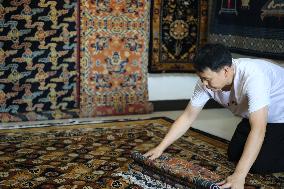
(240629) -- BEIJING, June 29, 2024 Photo by Xinhua/ABACAPRESS.COM) -- Ji Yu's husband Li Dongyang arranges palace carpets at her studio in Beijing, capital of China, June 27, 2024. Beijing palace carpet is a splendid example of China's traditional carpet weaving techniques. Known for its intricate production processes and beautiful patterns, the palace carpet represents the pinnacle of Chinese weaving artistry. The production involves four main steps: dyeing with traditional Chinese herbs, pattern design, weaving and shaping, and finally, finishing touches. As one of the "Beijing Eight Imperial Handicrafts," the art of palace carpet was designated a national intangible cultural heritage in 2008. Ji Yu, born in 1971 in central China's Henan Province, has dedicated over 30 years to the repair and creation of traditional palace carpets. In 1995, along with her husband Li Dongyang, she moved to Beijing to specialize in restoring ancient carpets. Over the years, the couple has insisted on traditional dyeing and we

  •  
(MASTER OF CRAFTS) CHINA-BEIJING-PALACE CARPET-INHERITOR-STUDIO (CN)

(MASTER OF CRAFTS) CHINA-BEIJING-PALACE CARPET-INHERITOR-STUDIO (CN)

(240629) -- BEIJING, June 29, 2024 Photo by Xinhua/ABACAPRESS.COM) -- This photo taken on June 27, 2024 shows a detail of a palace carpet displayed at the studio of Ji Yu in Beijing, capital of China. Beijing palace carpet is a splendid example of China's traditional carpet weaving techniques. Known for its intricate production processes and beautiful patterns, the palace carpet represents the pinnacle of Chinese weaving artistry. The production involves four main steps: dyeing with traditional Chinese herbs, pattern design, weaving and shaping, and finally, finishing touches. As one of the "Beijing Eight Imperial Handicrafts," the art of palace carpet was designated a national intangible cultural heritage in 2008. Ji Yu, born in 1971 in central China's Henan Province, has dedicated over 30 years to the repair and creation of traditional palace carpets. In 1995, along with her husband Li Dongyang, she moved to Beijing to specialize in restoring ancient carpets. Over the years, the couple has insisted on tradi

  •  
(MASTER OF CRAFTS) CHINA-BEIJING-PALACE CARPET-INHERITOR-STUDIO (CN)

(MASTER OF CRAFTS) CHINA-BEIJING-PALACE CARPET-INHERITOR-STUDIO (CN)

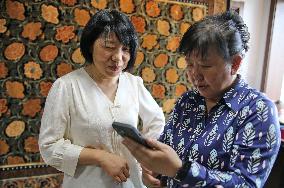
(240629) -- BEIJING, June 29, 2024 Photo by Xinhua/ABACAPRESS.COM) -- Ji Yu (L) and Wang Guoying discuss on the design patterns for a palace carpet in Beijing, capital of China, June 27, 2024. Beijing palace carpet is a splendid example of China's traditional carpet weaving techniques. Known for its intricate production processes and beautiful patterns, the palace carpet represents the pinnacle of Chinese weaving artistry. The production involves four main steps: dyeing with traditional Chinese herbs, pattern design, weaving and shaping, and finally, finishing touches. As one of the "Beijing Eight Imperial Handicrafts," the art of palace carpet was designated a national intangible cultural heritage in 2008. Ji Yu, born in 1971 in central China's Henan Province, has dedicated over 30 years to the repair and creation of traditional palace carpets. In 1995, along with her husband Li Dongyang, she moved to Beijing to specialize in restoring ancient carpets. Over the years, the couple has insisted on traditional d

  •  
(MASTER OF CRAFTS) CHINA-BEIJING-PALACE CARPET-INHERITOR-STUDIO (CN)

(MASTER OF CRAFTS) CHINA-BEIJING-PALACE CARPET-INHERITOR-STUDIO (CN)

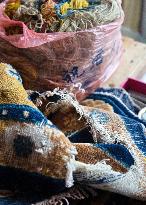
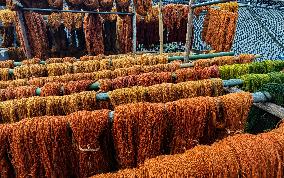
(240629) -- BEIJING, June 29, 2024 Photo by Xinhua/ABACAPRESS.COM) -- This undated photo shows materials dyed with Chinese herbs and medicines for making palace carpet at the factory of Ji Yu in central China's Henan Province. Beijing palace carpet is a splendid example of China's traditional carpet weaving techniques. Known for its intricate production processes and beautiful patterns, the palace carpet represents the pinnacle of Chinese weaving artistry. The production involves four main steps: dyeing with traditional Chinese herbs, pattern design, weaving and shaping, and finally, finishing touches. As one of the "Beijing Eight Imperial Handicrafts," the art of palace carpet was designated a national intangible cultural heritage in 2008. Ji Yu, born in 1971 in central China's Henan Province, has dedicated over 30 years to the repair and creation of traditional palace carpets. In 1995, along with her husband Li Dongyang, she moved to Beijing to specialize in restoring ancient carpets. Over the years, the co

  •  
(MASTER OF CRAFTS) CHINA-BEIJING-PALACE CARPET-INHERITOR-STUDIO (CN)

(MASTER OF CRAFTS) CHINA-BEIJING-PALACE CARPET-INHERITOR-STUDIO (CN)

(240629) -- BEIJING, June 29, 2024 Photo by Xinhua/ABACAPRESS.COM) -- Ji Yu shows a palace carpet at her studio in Beijing, capital of China, June 27, 2024. Beijing palace carpet is a splendid example of China's traditional carpet weaving techniques. Known for its intricate production processes and beautiful patterns, the palace carpet represents the pinnacle of Chinese weaving artistry. The production involves four main steps: dyeing with traditional Chinese herbs, pattern design, weaving and shaping, and finally, finishing touches. As one of the "Beijing Eight Imperial Handicrafts," the art of palace carpet was designated a national intangible cultural heritage in 2008. Ji Yu, born in 1971 in central China's Henan Province, has dedicated over 30 years to the repair and creation of traditional palace carpets. In 1995, along with her husband Li Dongyang, she moved to Beijing to specialize in restoring ancient carpets. Over the years, the couple has insisted on traditional dyeing and weaving techniques. During

  •  
(MASTER OF CRAFTS) CHINA-BEIJING-PALACE CARPET-INHERITOR-STUDIO (CN)

(MASTER OF CRAFTS) CHINA-BEIJING-PALACE CARPET-INHERITOR-STUDIO (CN)

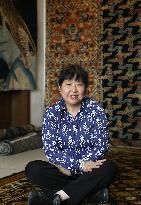
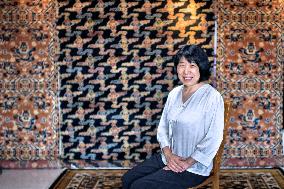
(240629) -- BEIJING, June 29, 2024 Photo by Xinhua/ABACAPRESS.COM) -- Ji Yu poses for a photo at her studio in Beijing, capital of China, June 27, 2024. Beijing palace carpet is a splendid example of China's traditional carpet weaving techniques. Known for its intricate production processes and beautiful patterns, the palace carpet represents the pinnacle of Chinese weaving artistry. The production involves four main steps: dyeing with traditional Chinese herbs, pattern design, weaving and shaping, and finally, finishing touches. As one of the "Beijing Eight Imperial Handicrafts," the art of palace carpet was designated a national intangible cultural heritage in 2008. Ji Yu, born in 1971 in central China's Henan Province, has dedicated over 30 years to the repair and creation of traditional palace carpets. In 1995, along with her husband Li Dongyang, she moved to Beijing to specialize in restoring ancient carpets. Over the years, the couple has insisted on traditional dyeing and weaving techniques. During the

  •  
(MASTER OF CRAFTS) CHINA-BEIJING-PALACE CARPET-INHERITOR-STUDIO (CN)

(MASTER OF CRAFTS) CHINA-BEIJING-PALACE CARPET-INHERITOR-STUDIO (CN)

(240629) -- BEIJING, June 29, 2024 Photo by Xinhua/ABACAPRESS.COM) -- Ji Yu shows the details of a palace carpet at her studio in Beijing, capital of China, June 27, 2024. Beijing palace carpet is a splendid example of China's traditional carpet weaving techniques. Known for its intricate production processes and beautiful patterns, the palace carpet represents the pinnacle of Chinese weaving artistry. The production involves four main steps: dyeing with traditional Chinese herbs, pattern design, weaving and shaping, and finally, finishing touches. As one of the "Beijing Eight Imperial Handicrafts," the art of palace carpet was designated a national intangible cultural heritage in 2008. Ji Yu, born in 1971 in central China's Henan Province, has dedicated over 30 years to the repair and creation of traditional palace carpets. In 1995, along with her husband Li Dongyang, she moved to Beijing to specialize in restoring ancient carpets. Over the years, the couple has insisted on traditional dyeing and weaving tec

  •  
(MASTER OF CRAFTS) CHINA-BEIJING-PALACE CARPET-INHERITOR-STUDIO (CN)

(MASTER OF CRAFTS) CHINA-BEIJING-PALACE CARPET-INHERITOR-STUDIO (CN)

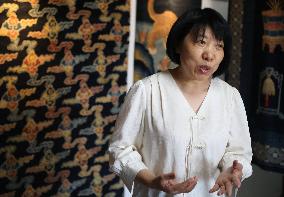
(240629) -- BEIJING, June 29, 2024 Photo by Xinhua/ABACAPRESS.COM) -- Ji Yu talks about palace carpet weaving at her studio in Beijing, capital of China, June 27, 2024. Beijing palace carpet is a splendid example of China's traditional carpet weaving techniques. Known for its intricate production processes and beautiful patterns, the palace carpet represents the pinnacle of Chinese weaving artistry. The production involves four main steps: dyeing with traditional Chinese herbs, pattern design, weaving and shaping, and finally, finishing touches. As one of the "Beijing Eight Imperial Handicrafts," the art of palace carpet was designated a national intangible cultural heritage in 2008. Ji Yu, born in 1971 in central China's Henan Province, has dedicated over 30 years to the repair and creation of traditional palace carpets. In 1995, along with her husband Li Dongyang, she moved to Beijing to specialize in restoring ancient carpets. Over the years, the couple has insisted on traditional dyeing and weaving techni

  •  
(MASTER OF CRAFTS) CHINA-BEIJING-PALACE CARPET-INHERITOR-STUDIO (CN)

(MASTER OF CRAFTS) CHINA-BEIJING-PALACE CARPET-INHERITOR-STUDIO (CN)

(240629) -- BEIJING, June 29, 2024 Photo by Xinhua/ABACAPRESS.COM) -- Ji Yu's husband Li Dongyang repairs a palace carpet at her studio in Beijing, capital of China, June 27, 2024. Beijing palace carpet is a splendid example of China's traditional carpet weaving techniques. Known for its intricate production processes and beautiful patterns, the palace carpet represents the pinnacle of Chinese weaving artistry. The production involves four main steps: dyeing with traditional Chinese herbs, pattern design, weaving and shaping, and finally, finishing touches. As one of the "Beijing Eight Imperial Handicrafts," the art of palace carpet was designated a national intangible cultural heritage in 2008. Ji Yu, born in 1971 in central China's Henan Province, has dedicated over 30 years to the repair and creation of traditional palace carpets. In 1995, along with her husband Li Dongyang, she moved to Beijing to specialize in restoring ancient carpets. Over the years, the couple has insisted on traditional dyeing and we

  •  
CHINA-SHANGHAI-INTANGIBLE CULTURAL HERITAGE-DYEING AND WEAVING CRAFT(CN)

CHINA-SHANGHAI-INTANGIBLE CULTURAL HERITAGE-DYEING AND WEAVING CRAFT(CN)

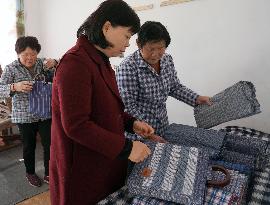
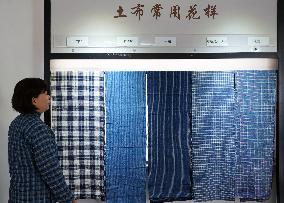
(240308) -- SHANGHAI, March 8, 2024 (Xinhua) -- Shen Jiahui (front), an inheritor of Tubu (homespun cloth) dyeing and weaving techniques, talks with villagers about the making skill in Dongmao Village, Qingpu District of Shanghai, east China, Feb. 27, 2024. Tubu dyeing and weaving craft is a local intangible cultural heritage in Shanghai. The handmade fabric with rich geometric patterns is popular in the countryside of Shanghai. In Dongmao Village, Tubu dyeing and weaving techniques are passed on and developed from generation to generation. In 2021, a training center was set up in the village to better promote the craft. Shen Jiahui, who is in charge of the training center, keeps on designing new products such as hand-bags, toys, and bookmarks, with the trainees. At present, the industry of the homespun cloth has not only increased the incomes for the locals of Dongmao Village, but also brought fame to the village. (Xinhua/Liu Ying)

  •  
CHINA-SHANGHAI-INTANGIBLE CULTURAL HERITAGE-DYEING AND WEAVING CRAFT(CN)

CHINA-SHANGHAI-INTANGIBLE CULTURAL HERITAGE-DYEING AND WEAVING CRAFT(CN)

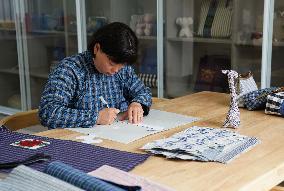
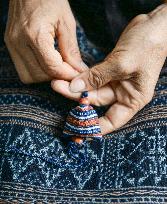
(240308) -- SHANGHAI, March 8, 2024 (Xinhua) -- Shen Jiahui, an inheritor of Tubu (homespun cloth) dyeing and weaving techniques, designs a toy at a training center in Dongmao Village, Qingpu District of Shanghai, east China, March 7, 2024. Tubu dyeing and weaving craft is a local intangible cultural heritage in Shanghai. The handmade fabric with rich geometric patterns is popular in the countryside of Shanghai. In Dongmao Village, Tubu dyeing and weaving techniques are passed on and developed from generation to generation. In 2021, a training center was set up in the village to better promote the craft. Shen Jiahui, who is in charge of the training center, keeps on designing new products such as hand-bags, toys, and bookmarks, with the trainees. At present, the industry of the homespun cloth has not only increased the incomes for the locals of Dongmao Village, but also brought fame to the village. (Xinhua/Liu Ying)

  •  
CHINA-SHANGHAI-INTANGIBLE CULTURAL HERITAGE-DYEING AND WEAVING CRAFT(CN)

CHINA-SHANGHAI-INTANGIBLE CULTURAL HERITAGE-DYEING AND WEAVING CRAFT(CN)

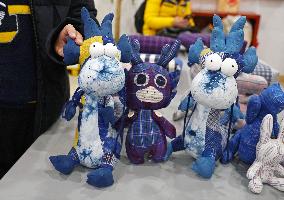
(240308) -- SHANGHAI, March 8, 2024 (Xinhua) -- This photo taken on Feb. 3, 2024 shows some toys made of Tubu (homespun cloth) during an intangible cultural heritage promotion class in Qingpu District of Shanghai, east China. Tubu dyeing and weaving craft is a local intangible cultural heritage in Shanghai. The handmade fabric with rich geometric patterns is popular in the countryside of Shanghai. In Dongmao Village, Tubu dyeing and weaving techniques are passed on and developed from generation to generation. In 2021, a training center was set up in the village to better promote the craft. Shen Jiahui, who is in charge of the training center, keeps on designing new products such as hand-bags, toys, and bookmarks, with the trainees. At present, the industry of the homespun cloth has not only increased the incomes for the locals of Dongmao Village, but also brought fame to the village. (Xinhua/Liu Ying)

  •  
CHINA-SHANGHAI-INTANGIBLE CULTURAL HERITAGE-DYEING AND WEAVING CRAFT(CN)

CHINA-SHANGHAI-INTANGIBLE CULTURAL HERITAGE-DYEING AND WEAVING CRAFT(CN)

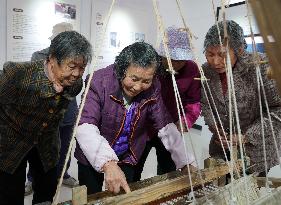
(240308) -- SHANGHAI, March 8, 2024 (Xinhua) -- Villagers looks at a loom at a training center of Tubu (homespun cloth) dyeing and weaving techniques in Dongmao Village, Qingpu District of Shanghai,, east China, Feb. 27, 2024. Tubu dyeing and weaving craft is a local intangible cultural heritage in Shanghai. The handmade fabric with rich geometric patterns is popular in the countryside of Shanghai. In Dongmao Village, Tubu dyeing and weaving techniques are passed on and developed from generation to generation. In 2021, a training center was set up in the village to better promote the craft. Shen Jiahui, who is in charge of the training center, keeps on designing new products such as hand-bags, toys, and bookmarks, with the trainees. At present, the industry of the homespun cloth has not only increased the incomes for the locals of Dongmao Village, but also brought fame to the village. (Xinhua/Liu Ying)

  •  
CHINA-SHANGHAI-INTANGIBLE CULTURAL HERITAGE-DYEING AND WEAVING CRAFT(CN)

CHINA-SHANGHAI-INTANGIBLE CULTURAL HERITAGE-DYEING AND WEAVING CRAFT(CN)

(240308) -- SHANGHAI, March 8, 2024 (Xinhua) -- Shen Jiahui, an inheritor of Tubu (homespun cloth) dyeing and weaving techniques, introduces the patterns on the cloth at a training center in Dongmao Village, Qingpu District of Shanghai, east China, March 7, 2024. Tubu dyeing and weaving craft is a local intangible cultural heritage in Shanghai. The handmade fabric with rich geometric patterns is popular in the countryside of Shanghai. In Dongmao Village, Tubu dyeing and weaving techniques are passed on and developed from generation to generation. In 2021, a training center was set up in the village to better promote the craft. Shen Jiahui, who is in charge of the training center, keeps on designing new products such as hand-bags, toys, and bookmarks, with the trainees. At present, the industry of the homespun cloth has not only increased the incomes for the locals of Dongmao Village, but also brought fame to the village. (Xinhua/Liu Ying)

  •  
CHINA-SHANGHAI-INTANGIBLE CULTURAL HERITAGE-DYEING AND WEAVING CRAFT(CN)

CHINA-SHANGHAI-INTANGIBLE CULTURAL HERITAGE-DYEING AND WEAVING CRAFT(CN)

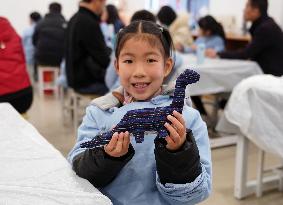
(240308) -- SHANGHAI, March 8, 2024 (Xinhua) -- A student shows a toy made of Tubu (homespun cloth) during an intangible cultural heritage promotion class in Qingpu District of Shanghai, east China, Feb. 3, 2024. Tubu dyeing and weaving craft is a local intangible cultural heritage in Shanghai. The handmade fabric with rich geometric patterns is popular in the countryside of Shanghai. In Dongmao Village, Tubu dyeing and weaving techniques are passed on and developed from generation to generation. In 2021, a training center was set up in the village to better promote the craft. Shen Jiahui, who is in charge of the training center, keeps on designing new products such as hand-bags, toys, and bookmarks, with the trainees. At present, the industry of the homespun cloth has not only increased the incomes for the locals of Dongmao Village, but also brought fame to the village. (Xinhua/Liu Ying)

  •  
CHINA-HAINAN-LI BROCADE-ITALY (CN)

CHINA-HAINAN-LI BROCADE-ITALY (CN)

(230502) -- BEIJING, May 2, 2023 (Xinhua) -- Liu Xianglan, a national-level practitioner of the spinning, dyeing and embroidery traditions of the Li people, displays Li brocade weaving techniques during Milan Design Week in Milan, Italy, on April 17, 2023. TO GO WITH "Across China: Ancient Hainanese brocade shines in Italy" (Xinhua)

  •  
(ChineseToday) CHINA-RURAL REVITALIZATION-YOUTH (CN)

(ChineseToday) CHINA-RURAL REVITALIZATION-YOUTH (CN)

(231222) -- BEIJING, Dec. 22, 2023 (Xinhua) -- Yuan Xiaoxin creates tie-dye patterns in Xiazhuang Village of Wushan County, southwest China's Chongqing Municipality, Oct. 10, 2023. Yuan, 31 years old, returned to her hometown and set up a tie-dye workshop in 2022. Tie-dye is one of the traditional dyeing techniques in China. With the improvement of the village infrastructure, more and more tourists come to Xiazhuang Village, and the tie-dye handicrafts produced by Yuan's workshop are selling well, with a monthly revenue of more than 10,000 yuan (about 1,401 U.S. dollars) during the tourist season. As China moved to advance rural revitalization, more and more young people have returned from cities to the countryside which now brims with possibilities. As the new-generation farmers or young entrepreneurs, they often brought back funds, modern farming concepts and e-commerce business models to help transform the farming landscape. (Xinhua/Huang Wei)

  •  
CHINA-HAINAN-DONGFANG-TEXTILE TECHNIQUES-WEAVER (CN)

CHINA-HAINAN-DONGFANG-TEXTILE TECHNIQUES-WEAVER (CN)

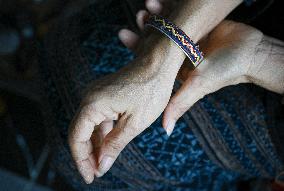
(230610) -- DONGFANG, June 10, 2023 (Xinhua) -- Fu Yongying shows a bracelet with textile elements of the Li ethnic group at home in Donghe Town of Dongfang City, south China's Hainan Province, June 7, 2023. The renowned textile techniques of the Li ethnic group in China's Hainan have a history of more than 3,000 years. Li people developed an entire system of techniques including spinning, dyeing, weaving and embroidering. In 2006, the Li textile techniques were listed in the first batch of China's national intangible cultural heritage. Fu Yongying is a provincial-level inheritor of the traditional Li textile techniques. Inspired by successful experience of cultural and creative products, she has made a series of popular products including toys, sachets, earrings, bracelets, pendants, handbags, etc., bringing new vitality to the traditional Li textiles. (Xinhua/Pu Xiaoxu)

  •  
CHINA-HAINAN-DONGFANG-TEXTILE TECHNIQUES-WEAVER (CN)

CHINA-HAINAN-DONGFANG-TEXTILE TECHNIQUES-WEAVER (CN)

(230610) -- DONGFANG, June 10, 2023 (Xinhua) -- Fu Yongying makes toys with ethnic Li textiles at home in Donghe Town of Dongfang City, south China's Hainan Province, June 7, 2023. The renowned textile techniques of the Li ethnic group in China's Hainan have a history of more than 3,000 years. Li people developed an entire system of techniques including spinning, dyeing, weaving and embroidering. In 2006, the Li textile techniques were listed in the first batch of China's national intangible cultural heritage. Fu Yongying is a provincial-level inheritor of the traditional Li textile techniques. Inspired by successful experience of cultural and creative products, she has made a series of popular products including toys, sachets, earrings, bracelets, pendants, handbags, etc., bringing new vitality to the traditional Li textiles. (Xinhua/Pu Xiaoxu)

  •  
CHINA-HAINAN-DONGFANG-TEXTILE TECHNIQUES-WEAVER (CN)

CHINA-HAINAN-DONGFANG-TEXTILE TECHNIQUES-WEAVER (CN)

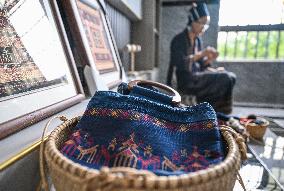
(230610) -- DONGFANG, June 10, 2023 (Xinhua) -- This photo taken on June 7, 2023 shows handbags made from ethnic Li textiles by Fu Yongying at her home in Donghe Town of Dongfang City, south China's Hainan Province. The renowned textile techniques of the Li ethnic group in China's Hainan have a history of more than 3,000 years. Li people developed an entire system of techniques including spinning, dyeing, weaving and embroidering. In 2006, the Li textile techniques were listed in the first batch of China's national intangible cultural heritage. Fu Yongying is a provincial-level inheritor of the traditional Li textile techniques. Inspired by successful experience of cultural and creative products, she has made a series of popular products including toys, sachets, earrings, bracelets, pendants, handbags, etc., bringing new vitality to the traditional Li textiles. (Xinhua/Pu Xiaoxu)

  •  
CHINA-HAINAN-DONGFANG-TEXTILE TECHNIQUES-WEAVER (CN)

CHINA-HAINAN-DONGFANG-TEXTILE TECHNIQUES-WEAVER (CN)

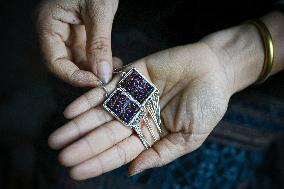
(230610) -- DONGFANG, June 10, 2023 (Xinhua) -- Fu Yongying shows a pair of earrings with textile elements of the Li ethnic group in Donghe Town of Dongfang City, south China's Hainan Province, June 7, 2023. The renowned textile techniques of the Li ethnic group in China's Hainan have a history of more than 3,000 years. Li people developed an entire system of techniques including spinning, dyeing, weaving and embroidering. In 2006, the Li textile techniques were listed in the first batch of China's national intangible cultural heritage. Fu Yongying is a provincial-level inheritor of the traditional Li textile techniques. Inspired by successful experience of cultural and creative products, she has made a series of popular products including toys, sachets, earrings, bracelets, pendants, handbags, etc., bringing new vitality to the traditional Li textiles. (Xinhua/Pu Xiaoxu)

  •  
CHINA-HAINAN-DONGFANG-TEXTILE TECHNIQUES-WEAVER (CN)

CHINA-HAINAN-DONGFANG-TEXTILE TECHNIQUES-WEAVER (CN)

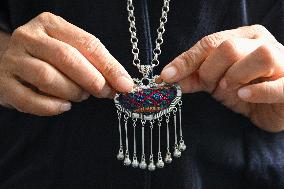
(230610) -- DONGFANG, June 10, 2023 (Xinhua) -- Fu Yongying shows a pendant with textile elements of the Li ethnic group at home in Donghe Town of Dongfang City, south China's Hainan Province, June 7, 2023. The renowned textile techniques of the Li ethnic group in China's Hainan have a history of more than 3,000 years. Li people developed an entire system of techniques including spinning, dyeing, weaving and embroidering. In 2006, the Li textile techniques were listed in the first batch of China's national intangible cultural heritage. Fu Yongying is a provincial-level inheritor of the traditional Li textile techniques. Inspired by successful experience of cultural and creative products, she has made a series of popular products including toys, sachets, earrings, bracelets, pendants, handbags, etc., bringing new vitality to the traditional Li textiles. (Xinhua/Pu Xiaoxu)

  •  
CHINA-HAINAN-DONGFANG-TEXTILE TECHNIQUES-WEAVER (CN)

CHINA-HAINAN-DONGFANG-TEXTILE TECHNIQUES-WEAVER (CN)

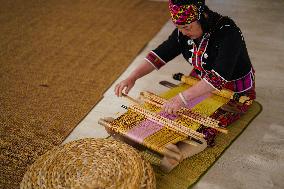
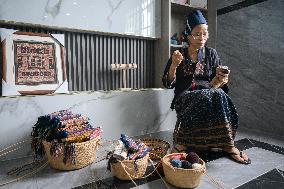
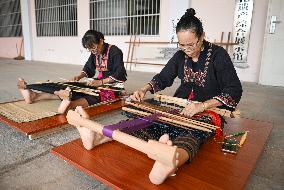
(230610) -- DONGFANG, June 10, 2023 (Xinhua) -- Fu Yongying (R) weaves ethnic Li textiles in Dongfang City, south China's Hainan Province, June 6, 2023. The renowned textile techniques of the Li ethnic group in China's Hainan have a history of more than 3,000 years. Li people developed an entire system of techniques including spinning, dyeing, weaving and embroidering. In 2006, the Li textile techniques were listed in the first batch of China's national intangible cultural heritage. Fu Yongying is a provincial-level inheritor of the traditional Li textile techniques. Inspired by successful experience of cultural and creative products, she has made a series of popular products including toys, sachets, earrings, bracelets, pendants, handbags, etc., bringing new vitality to the traditional Li textiles. (Xinhua/Pu Xiaoxu)

  •  
CHINA-HAINAN-DONGFANG-TEXTILE TECHNIQUES-WEAVER (CN)

CHINA-HAINAN-DONGFANG-TEXTILE TECHNIQUES-WEAVER (CN)

(230610) -- DONGFANG, June 10, 2023 (Xinhua) -- Fu Yongying shows a sachet with textile elements of the Li ethnic group at home in Donghe Town of Dongfang City, south China's Hainan Province, June 7, 2023. The renowned textile techniques of the Li ethnic group in China's Hainan have a history of more than 3,000 years. Li people developed an entire system of techniques including spinning, dyeing, weaving and embroidering. In 2006, the Li textile techniques were listed in the first batch of China's national intangible cultural heritage. Fu Yongying is a provincial-level inheritor of the traditional Li textile techniques. Inspired by successful experience of cultural and creative products, she has made a series of popular products including toys, sachets, earrings, bracelets, pendants, handbags, etc., bringing new vitality to the traditional Li textiles. (Xinhua/Pu Xiaoxu)

  •  
CHINA-HAINAN-LI BROCADE-ITALY (CN)

CHINA-HAINAN-LI BROCADE-ITALY (CN)

(230502) -- BEIJING, May 2, 2023 (Xinhua) -- Liu Xianglan, a national-level practitioner of the spinning, dyeing and embroidery traditions of the Li people, displays Li brocade weaving techniques during Milan Design Week in Milan, Italy, on April 17, 2023. TO GO WITH "Across China: Ancient Hainanese brocade shines in Italy" (Xinhua)

  •  
Tourist train featuring motifs from traditional Ishikawa crafts

Tourist train featuring motifs from traditional Ishikawa crafts

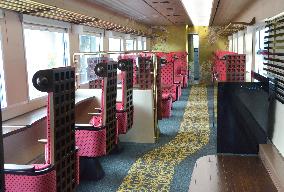
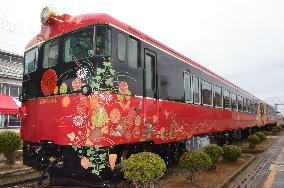
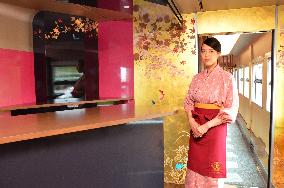
West Japan Railway Co. unveils to the press Aug. 21, 2015, in Hakusan, Ishikawa Prefecture, a tourist train decorated inside and outside with motifs from local traditional crafts such as Wajima lacquerware and Kaga kimono dyeing techniques. The train will run on the JR Nanao Line beginning in October 2015. (Kyodo) ==Kyodo

  •  
Tourist train featuring motifs from traditional Ishikawa crafts

Tourist train featuring motifs from traditional Ishikawa crafts

West Japan Railway Co. unveils to the press Aug. 21, 2015, in Hakusan, Ishikawa Prefecture, a tourist train decorated inside and outside with motifs from local traditional crafts such as Wajima lacquerware and Kaga kimono dyeing techniques. The train will run on the JR Nanao Line beginning in October 2015. (Kyodo) ==Kyodo

  •  
Tourist train featuring motifs from traditional Ishikawa crafts

Tourist train featuring motifs from traditional Ishikawa crafts

West Japan Railway Co. unveils to the press Aug. 21, 2015, in Hakusan, Ishikawa Prefecture, a tourist train decorated inside and outside with motifs from local traditional crafts such as Wajima lacquerware and Kaga kimono dyeing techniques. The train will run on the JR Nanao Line beginning in October 2015. (Kyodo) ==Kyodo

  • Main
  • Top
  • Editorial
  • Creative
  • About Us
  • About ILG
  • Terms of use
  • Company
  • BEHIND
  • Price List
  • Single Plan
  • Monthly Plan
  • Services
  • Shooting
  • Rights Clearance
  • Support
  • FAQ
  • How To Buy
  • Contact Us
  • Become a Partner

© KYODO NEWS IMAGES INC

All Rights Reserved.

  • Editorial
  • Olympics
  • News
  • Sports
  • Japan
  • Tech
  • Royal
  • Disaster
  • NorthKorea
  • Old Japan
  • SNS
  • Creative
  • Food
  • Japan
  • Landscape
  • Animal
  • Popular
  • #Ukraine
  • #China
  • #coronavirus
  • #N. Korea
  • #Thailand
  • #Russia
  • #Ukraine
  • #China
  • #coronavirus
  • #N. Korea
  • #Thailand
  • #Russia
  • Food
  • Japan
  • Landscape
  • Animal
  • Olympics
  • News
  • Sports
  • Japan
  • Tech
  • Royal
  • Disaster
  • NorthKorea
  • Old Japan
  • SNS